
Cable condition and routing
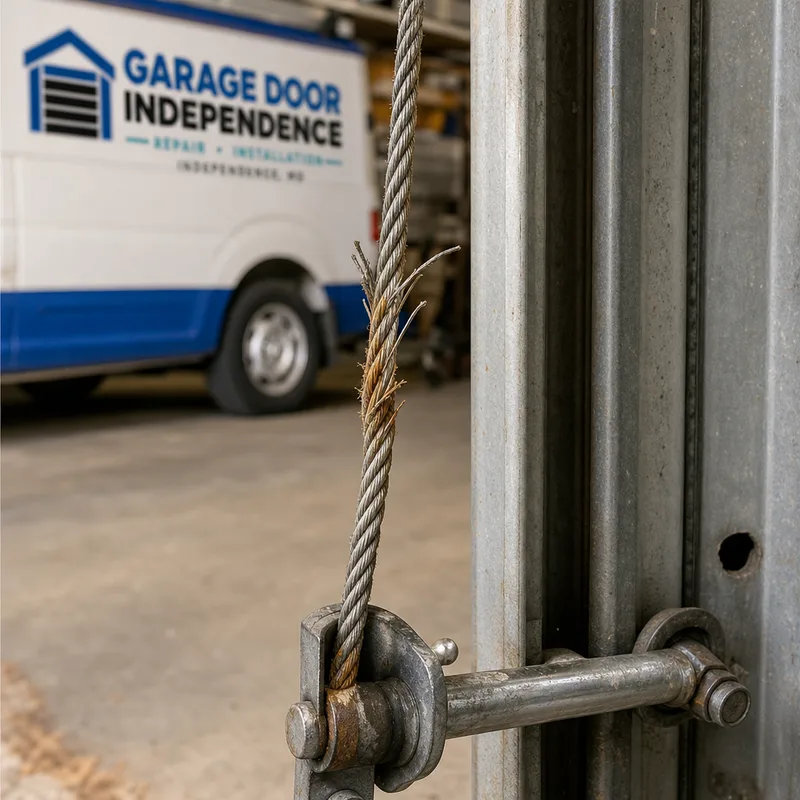
The contractor looks for fraying, rust, kinks, and whether the cable is routed correctly to the bottom bracket and seated on the drum without crossing grooves.
Serving Independence, Missouri & surrounding areas
Calls answered around the clock
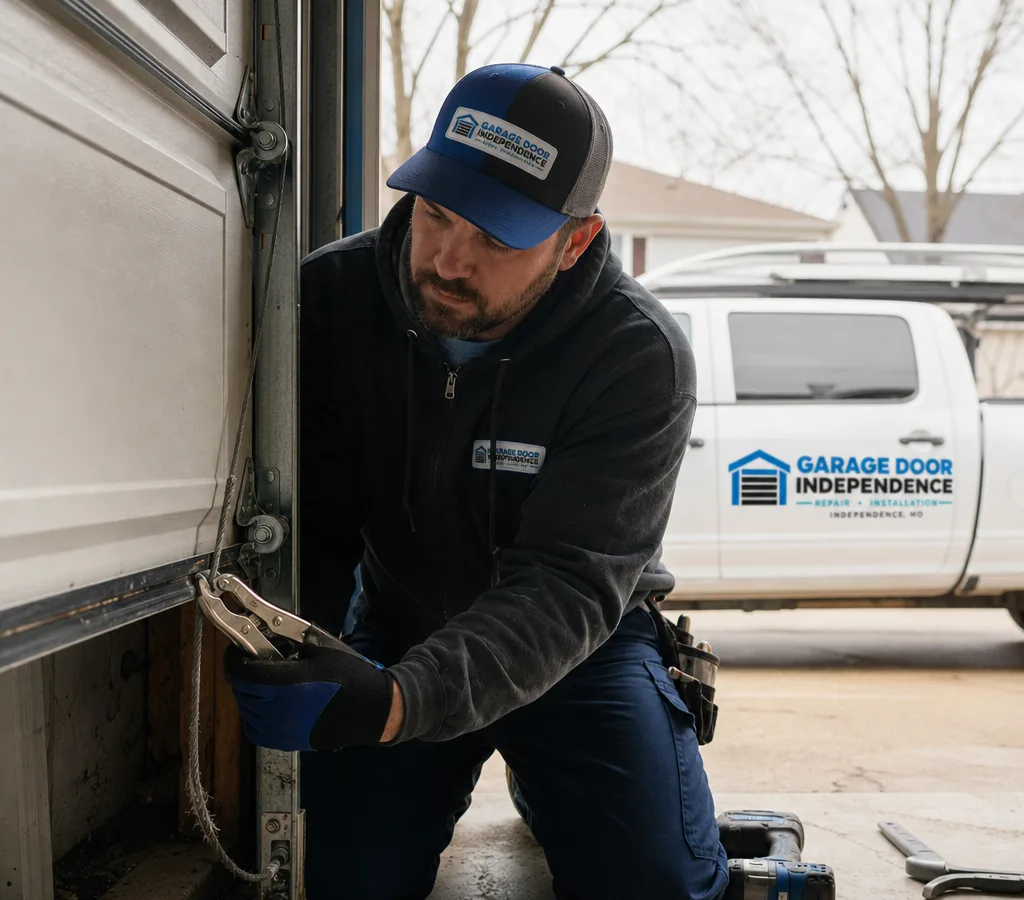
Cable repair · Independence, Missouri
Describe what happened once and we'll connect you with a local Independence contractor who repairs cables, rollers, and off-track doors safely.
CALL NOW: (816) 379-4400Cable failure guidance
A broken garage door cable can turn a normal open-and-close cycle into a jammed, crooked door that won't move or that tries to lift unevenly. Cables carry a lot of load in a torsion or extension spring system, and when one fails the door can rack, pull rollers out of the track, and bend hardware.
Garage Door Independence is a referral service. When you call, we take a few details about what your door is doing and connect you with a local contractor who handles garage door cable repair in Independence and the surrounding area.
A cable failure rarely stays isolated. Once one side loses tension, the door can drag a roller flange against the track lip, climb out of the track, or slam down and deform the vertical track. That is why a contractor commonly checks for off-track repair needs and looks closely at rollers, hinges, and track alignment before replacing parts.
If the problem seems tied to the opener—for example, the motor runs but the door won't move, or the trolley is disconnected—a separate diagnosis may be needed.
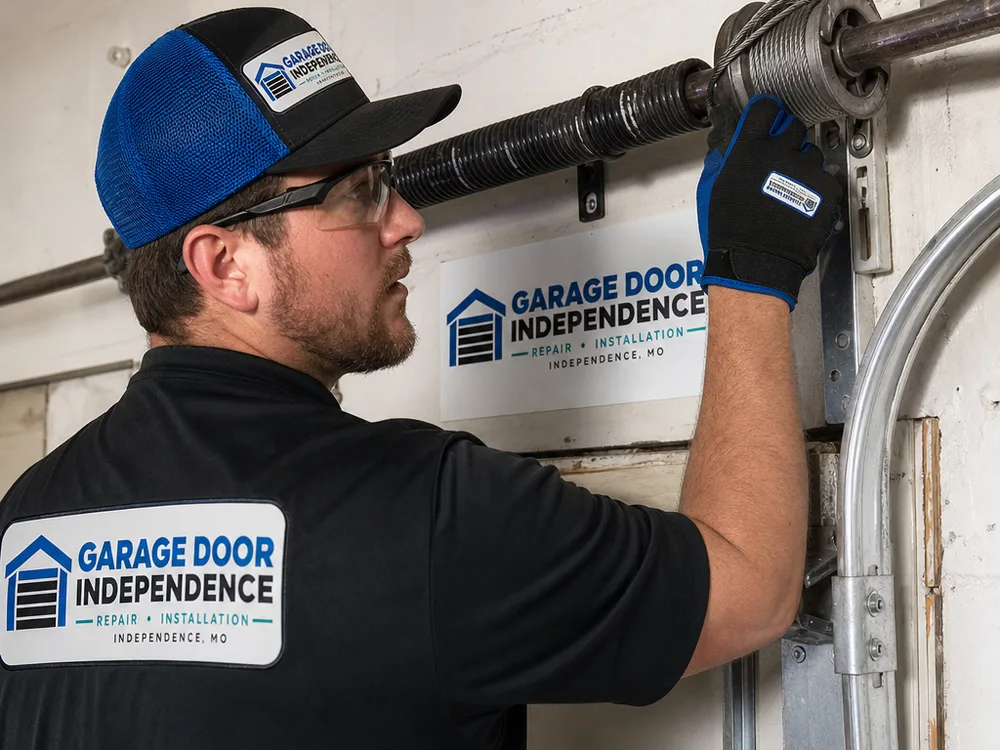
Practical inspection points
The contractor looks for fraying, rust, kinks, and whether the cable is routed correctly to the bottom bracket and seated on the drum without crossing grooves.
Cables work with the spring system. A contractor checks door balance, spring condition, and whether one side lost tension, which can cause repeat cable failures.
Worn bearings or a damaged drum can chew up a new cable. The contractor inspects the shaft, bearing plates, and hardware for play or misalignment.
If the door racked when the cable broke, the contractor checks for loose lag screws, track spread, and dents that pinch rollers.
A door that went crooked can pop rollers partly out of the track or flatten a roller. Roller repair may be recommended if wheels wobble, bind, or have cracked stems.
The referral and repair sequence
01
Share what you saw and heard, whether the door is stuck open or closed, and if a cable is hanging loose. We use that to connect you with a local contractor who takes this type of call.
02
Before anything is loosened, the contractor typically secures the door to the track and relieves tension in a controlled way. This step is central when a door is cocked or partially off track.
03
The contractor checks drums, springs, bottom brackets, rollers, and the track for damage or misalignment so the repair addresses what caused the cable to fail or slip.
04
Depending on what's found, the cable may be replaced, re-terminated at the bottom bracket, or reset onto the drum. If the door is off track, the track is realigned and rollers are corrected or replaced.
05
The contractor runs the door through multiple cycles, verifies smooth travel, checks opener force and travel limits when applicable, and confirms the door is lifting evenly.
If your door is crooked, stuck, or a cable is hanging loose, describe the situation once and get connected with a local contractor who works on cable, track, and roller problems.
Cable and track details
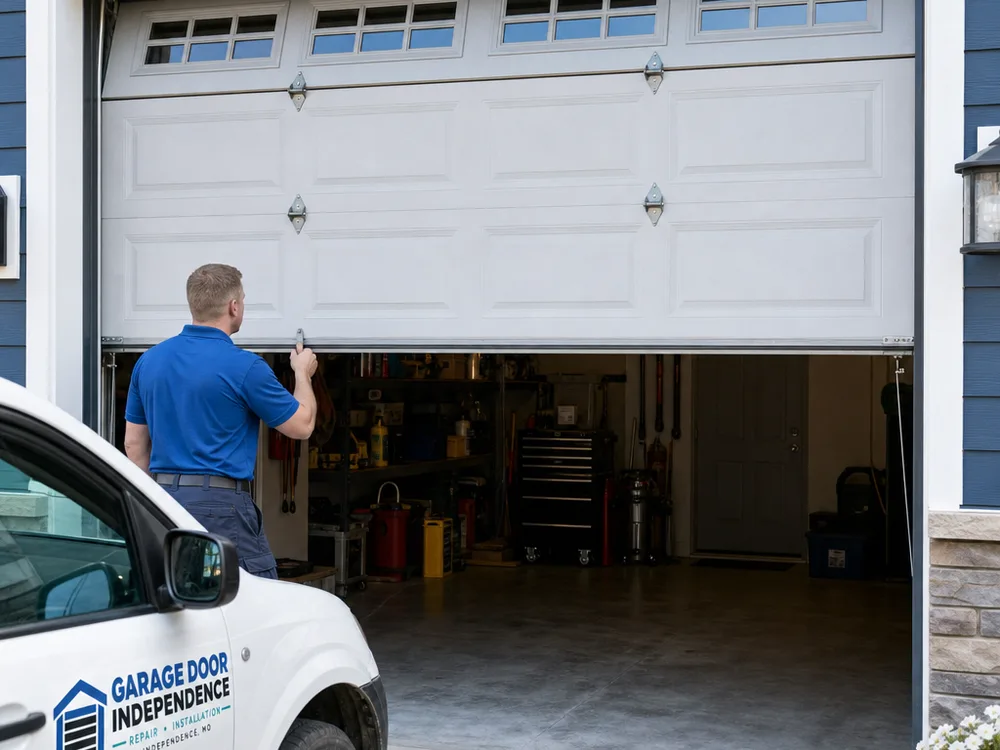
Homeowner questions
No, a broken cable can let the door lift unevenly and bind, which can damage the opener, bend the track, or pull the door off track. Leave the door alone and explain what's happening when you call so the contractor arrives prepared to secure the door first.
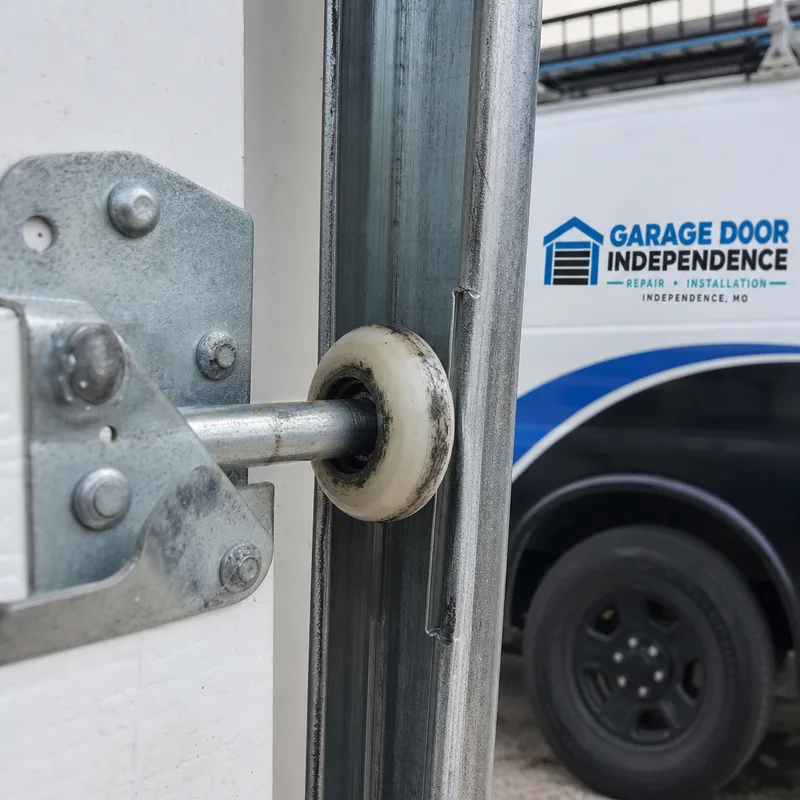
Rollers that wobble on the stem, bind in one spot, have cracked wheels, or sit at an angle in the track often need attention. The contractor will check the roller stems, hinges, and track spacing; if the wheel or stem is worn, roller replacement may be recommended for reliable travel.
Common causes include frayed cable strands from age and corrosion, a cable rubbing because a drum is misaligned, the door running out of level, or a sudden jam that unloads one side. If a spring system is out of balance, cables can lose tension and jump drum grooves even without fully breaking.
Not always. A door can come off track because a roller climbed the track lip or hardware loosened, but an impact or a hard bind can also deform the vertical or horizontal track. The contractor will look for kinks, pinched spots, track spread, and shifted brackets before resetting rollers.
Tell us whether the door is stuck open or closed, if one side is lower, and whether you can see a loose or broken cable. If you know it, share whether the door has torsion springs—a shaft above the door—or extension springs along the sides, and whether anything hit the track recently.
Often the contractor will discuss replacing both because cables usually wear at a similar rate and unequal wear can affect how evenly the door lifts. The right choice depends on what they find at the drums, bottom brackets, and the condition of the remaining cable.
You call, describe the problem once, and we connect you with a local contractor who handles broken cable, off-track, and roller issues. You speak with the contractor directly about diagnosis, options, and scheduling, and you decide whether to move forward.
Local cable repair connection
If a cable snapped, the door is leaning, or rollers are binding, a phone call can get the situation in front of a local contractor who repairs cables, corrects off-track doors, and addresses track or roller damage as needed.