
Describe it once
Explain what the door is doing—noise, sticking point, or off-track behavior—and the details get passed to a local contractor who handles roller replacement.
Serving Independence, Missouri & surrounding areas
Calls answered around the clock
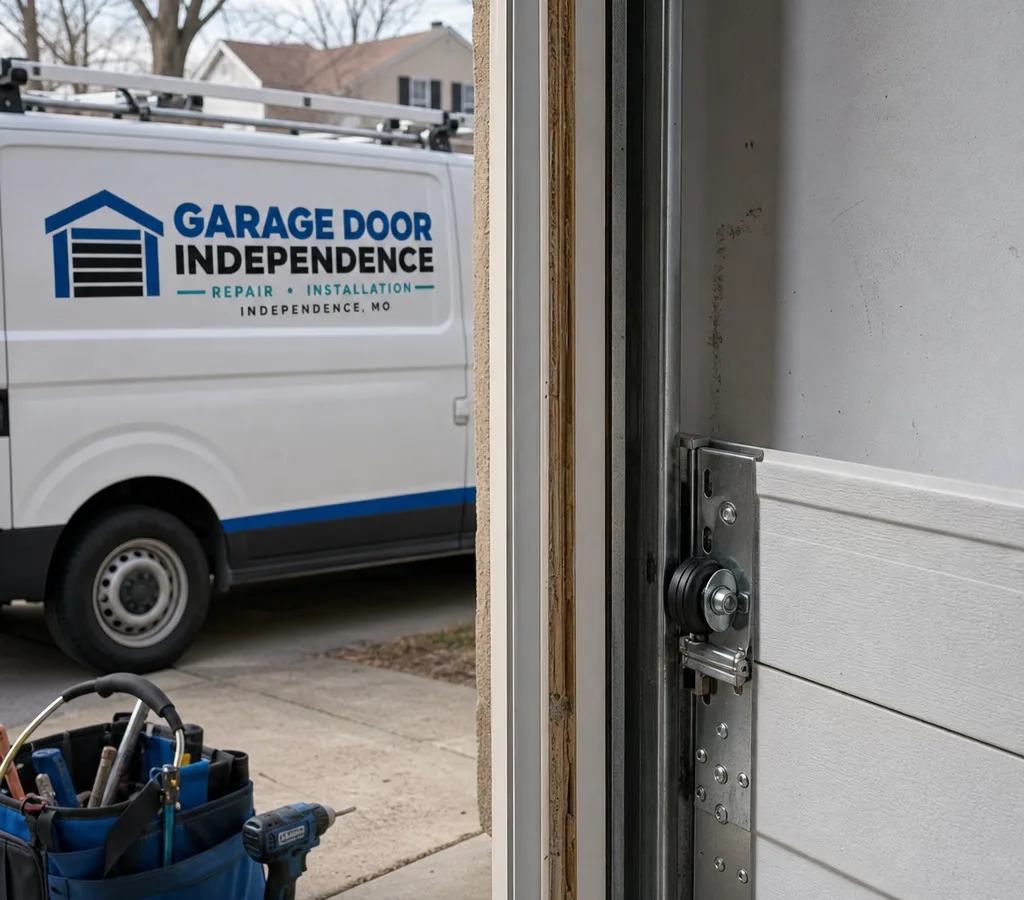
Garage door roller service · Grain Valley, Missouri
Describe the sticking, grinding, or off-track door once and get connected with a local contractor who can replace the rollers and get your door moving smoothly again.
CALL NOW: (816) 379-4400Roller and track diagnosis
If you're searching for garage door roller replacement Grain Valley, you're usually dealing with one of a few symptoms: loud rattling or squealing, a door that binds halfway up, visible wobble in the tracks, or a door that looks like it's trying to climb out of the vertical track.
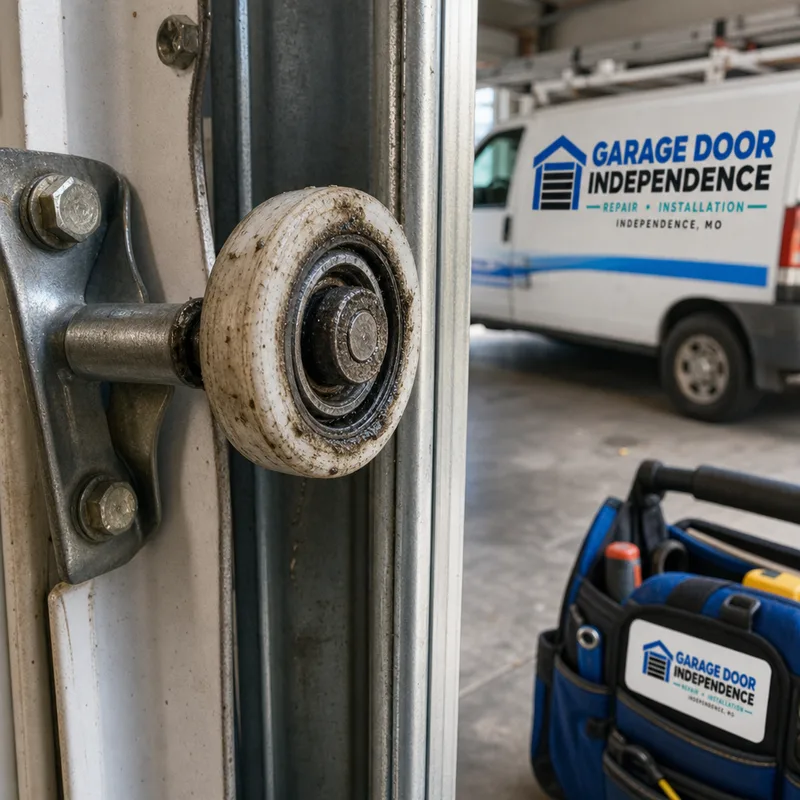
Garage door rollers carry the weight of the door as it travels in the metal tracks. When the bearings inside a roller dry out, seize, or develop flat spots, the opener has to pull harder, the door can jerk instead of glide, and the track takes extra abuse. In the Kansas City-area climate, humid summers and cold snaps can make worn rollers more noticeable as metal moves and lubricants thicken.
A contractor will usually start by watching the door travel by hand with the opener disconnected to feel where it binds. They'll look for:
Roller replacement is often straightforward, but it is not always the only issue. A good diagnosis matters because replacing rollers on a door with a track problem can leave the original sticking and noise in place.
If the door's problems seem tied to the opener—such as reversing, straining, or failing to lift—the opener system may also need attention after the door itself is rolling smoothly.
One call simplifies the next step
Explain what the door is doing—noise, sticking point, or off-track behavior—and the details get passed to a local contractor who handles roller replacement.
You're connected with an independent contractor who works in the Independence and Grain Valley area.
Rollers, hinges, tracks, and the opener interact. The contractor can confirm whether you need rollers only or additional track and hardware corrections.
You talk to the contractor directly, ask questions, and decide whether to move forward after hearing their approach.
If the door is stuck closed or won't stay on track, calls are answered around the clock so you can work on next steps without waiting for business hours.
The replacement sequence
01
The contractor will want the door type, what you're hearing, whether the door is stuck, and whether any rollers have come out of the track.
02
Before any rollers are swapped, the door is evaluated for track alignment, hinge wear, loose fasteners, and cable and spring condition. Rollers do not fail in isolation when a door has been binding.
03
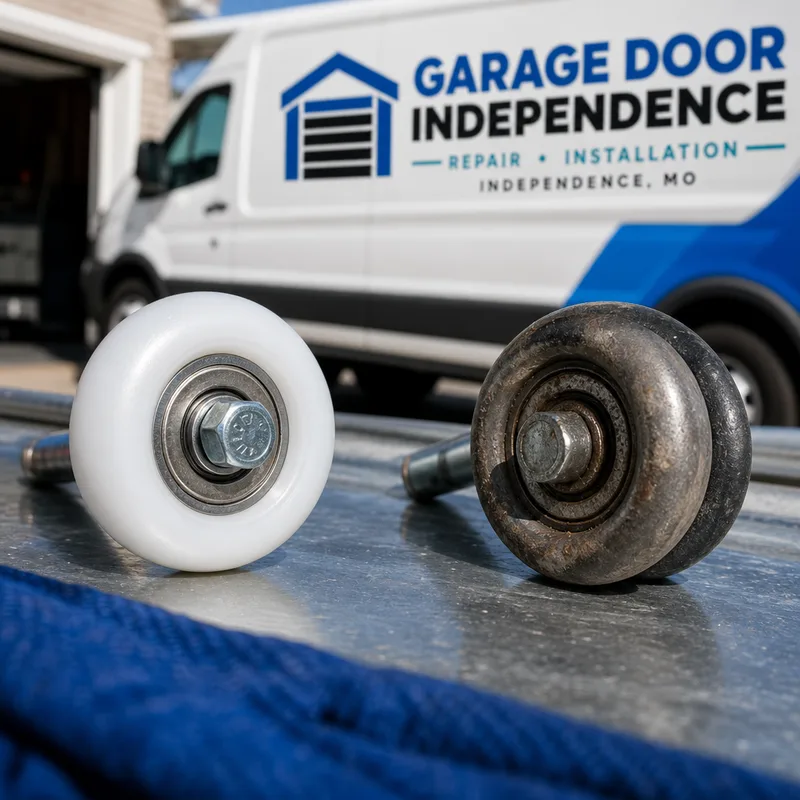
Most residential doors use either nylon rollers with bearings for quieter movement or durable steel rollers that can be noisier. The contractor matches roller stem length and diameter to the hinges and track.
04
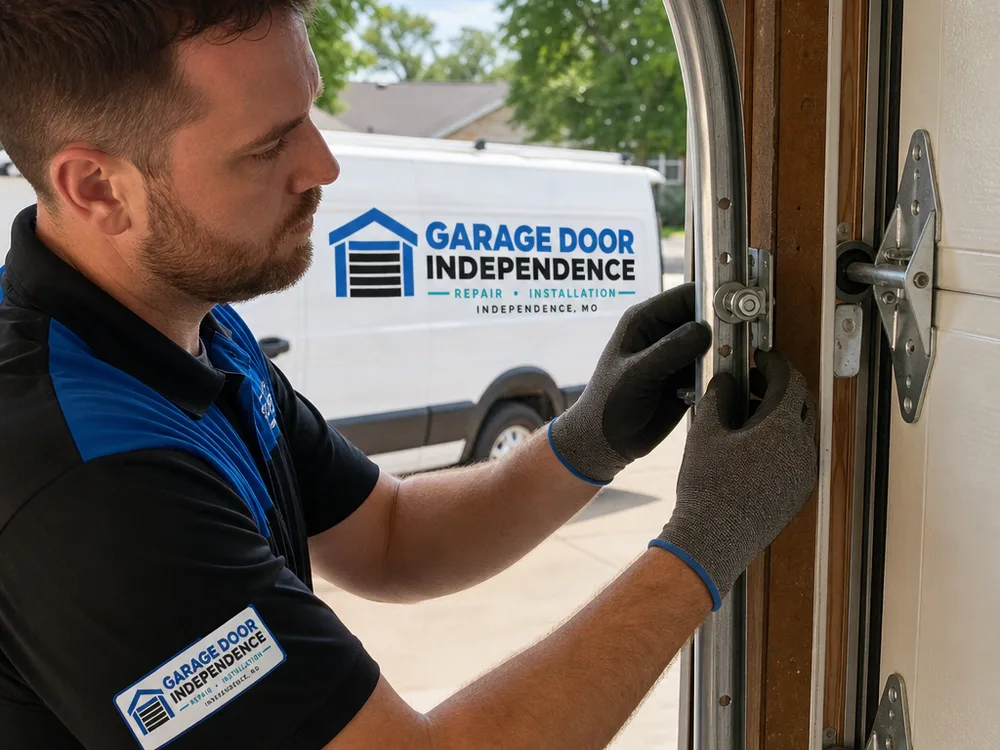
With the door secured, rollers are replaced section by section. The track is checked for dents and spacing, and the contractor confirms smooth travel by hand before reconnecting the opener.
05
Roller bearings, hinge pivot points, and springs are lubricated with the appropriate product. The door is then cycled to confirm reduced noise and no remaining sticking points.
If the door is shaking, squealing, or binding in the tracks, describe what you're seeing once and get connected with a local contractor who can replace the rollers and check the track at the same time.
Roller and track details
Homeowner questions
A roller problem often shows up as clicking, grinding, or a wheel that does not spin freely, while a track problem can show up as rubbing, a visible gap change, or a door that leans as it moves. A contractor usually disconnects the opener and moves the door by hand, then checks track brackets, hinge wear, and roller bearing condition together.
Yes. Noise is a common early warning because bearings dry out and begin to chatter under load. If the sound changes suddenly in colder weather, thicker lubricant and metal contraction can make already-worn rollers more noticeable.
For many sectional doors, contractors commonly discuss nylon rollers with bearings for quieter operation and steel rollers for durability. The right choice depends on the door's weight, hinge and stem size, and whether the door is already stressing other hardware.
Often the rollers have similar age and wear, so the contractor may recommend replacing them as a set to keep the door tracking evenly. They can also point out whether only a few rollers are damaged because of a specific issue such as a bent hinge or dented track.
Treat it as a safety issue and stop operating the door because a partially off-track door can bind and pull on the cables. When you call, describe whether the door is stuck open or closed and which side the roller came out on.
Sometimes, but not always. A binding door can make the opener sense extra resistance and reverse, but reversing can also come from force settings, travel limits, or photo-eye alignment. The contractor can determine whether the problem is in the door hardware or opener system.
Note the door size, whether it uses standard or high-lift track, where it sticks, and whether you see cracked wheels or wobbling. If it is safe, clear photos of the roller and hinge area and the track curve can help the contractor identify likely parts.
Calls are answered around the clock, and we can connect you with a local contractor who handles stuck or unsafe doors. Explain whether the door is jammed, off-track, or being held up by the opener so the contractor understands the urgency and likely hardware involved.
Local roller replacement connection
Call Garage Door Independence and describe what your door is doing. You'll be connected with a local contractor who can evaluate the rollers, check the tracks and hinges, and talk through the repair options directly with you.